Source: Canva Editor
Whangamatā fills up over summer as holidaymakers head to the Coromandel Peninsula for beaches, events and seasonal travel. Whangamatā Club is part of that local hospitality mix, with dining, bars, sports viewing, TAB facilities, raffles, recreation and a dedicated gaming room at its Port Road premises.
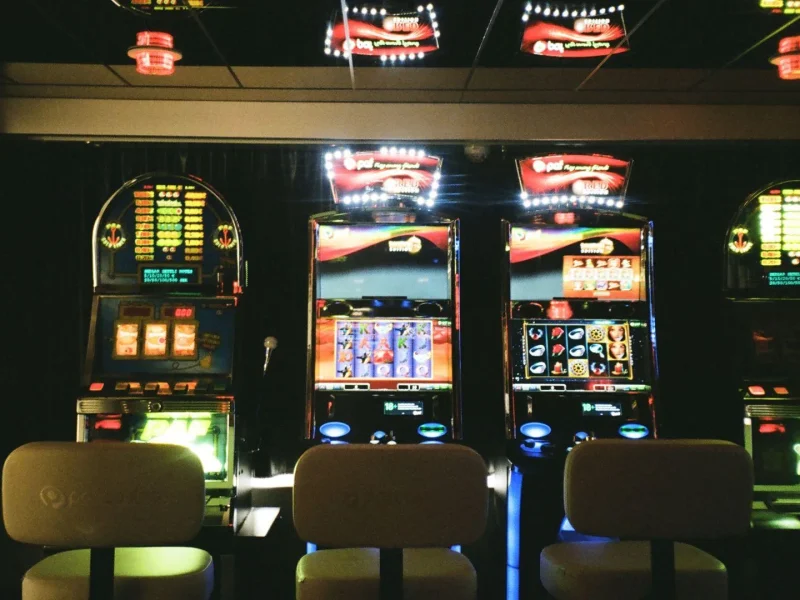
Regional pokie data list the club with 18 electronic gaming machines. That figure establishes capacity. It does not show whether the lounge becomes busier in summer, how often the machines are occupied, or whether turnover and gaming-machine profit rise with visitor numbers. The available evidence therefore supports a busy seasonal setting around the club, but not a documented surge inside the gaming room.
Summer Footfall Can Mean Many Things
A coastal town can become crowded without every venue activity increasing at the same rate. Visitors to Whangamatā Club may be there for lunch, drinks, a sporting broadcast, TAB betting, a raffle or simply to meet other members. Even if total attendance rises during peak holiday weeks, there is no reliable basis for assigning that increase to pokies.
Gaming-room entries, occupied machines, total wagers and machine profit are not interchangeable. One person can generate substantial turnover during a long session, while a room with many visitors may produce comparatively modest machine activity. Without venue-level records, summer tourism cannot be converted into a gambling-performance claim.
Gaming Sits Inside a Broader Club Operation
Whangamatā Club is not presented as a standalone gambling venue. Its membership offering includes a bistro, large dining area, outdoor seating, two bars, Sky Sport, TAB self-service terminals, raffles, darts, snooker and eight-ball. That setting differs sharply from online casino environments such as tooniebet which targets Canadian players outside Ontario and combines more than 5,000 casino games with a large live-dealer lobby. Whangamatā Club’s gaming room instead operates as one facility inside a local social and hospitality venue.
Its 18 listed machines indicate the size of the approved gaming facility, but capacity says nothing about utilization. An 18-machine room may be lightly used for much of the day and busy for short periods, or show little seasonal change at all. A credible claim about summer demand would need monthly machine turnover, room-entry data, machine-utilization figures, gaming-machine profit or a statement from club management. A comparison with previous summers would be stronger still. None of those measures appears in the public material reviewed.
What the 18 Machines Mean Under Class 4 Gambling Rules
Pokies in New Zealand clubs generally fall under Class 4 gambling provisions in the Gambling Act 2003. Licensed corporate societies may operate gaming machines at approved venues subject to statutory conditions. Gaming-machine profit is calculated from turnover after prizes are paid, while eligible net proceeds must be applied or distributed to authorized community purposes.
The 18 machines reported at Whangamatā Club correspond with the number commonly associated with the upper limit for a club venue under the Class 4 system. That does not mean all machines are active continuously, nor that the room reaches capacity during holiday periods.
Class 4 operators are also subject to reporting requirements covering the conduct of gambling and the use or distribution of net proceeds. Those records provide a more meaningful basis for assessing gaming performance than observations about the number of tourists in town.
Revenue Figures Need Precise Interpretation
Machine turnover can sound like revenue, but it is not. Turnover measures the amount wagered through the machines. Gaming-machine profit is the amount left after prizes have been paid. Neither number reveals how many people played or how long they stayed.
A seasonal rise in turnover could therefore result from longer sessions, larger wagers, more players, or some combination of those factors.
Pokies also require careful responsible-gambling framing. They are an adult form of gambling and should be treated as paid entertainment, not as a way to generate income. Players should avoid increasing stakes to recover losses and use available limits, exclusion options or support services if gambling becomes difficult to control.
One Room Among Many Reasons to Visit
Strip away the seasonal framing and Whangamatā Club looks like most Class 4 venues across New Zealand: a hospitality space where the gaming room is one drawcard among several, not the reason the doors stay open. The bistro, the bars, the TAB terminals, the raffles and the eight-ball table all compete for the same members and visitors the pokies room does.
Under the Class 4 system, the 18 machines exist to fund community grants, not to anchor the venue’s commercial identity. Whichever way Whangamatā’s summer numbers eventually land, the gaming room will keep functioning the way it’s designed to: as a fixed, capped facility inside a much larger social space, doing its job quietly whether the town is at its busiest or its quietest.