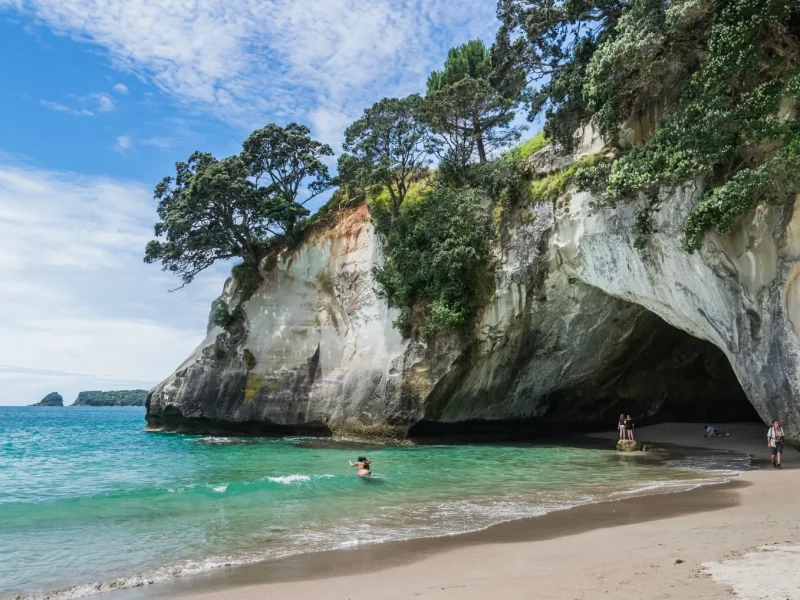
The Coromandel Peninsula packs more into a few hours’ drive than almost anywhere in New Zealand: a famous sea archway, a beach where you dig your own hot pool, alpine rock spires, kauri forests and a string of beaches that range from busy and brilliant to road-free and empty. This guide rounds up the 18 best things to do on the Coromandel, organised by area, with the practical details most guides leave out — how long each takes, what it costs, how hard it is, where to park, and one-tap directions to every spot.
The peninsula has two very different sides. The east coast — Whangamata, Tairua, Hahei and Whitianga — is the land of white-sand surf beaches and the headline attractions. The quieter west coast, on the Hauraki Gulf, is built around historic Coromandel Town and the remote far north. Basing yourself on the east coast (Whangamata makes an ideal hub) puts most of the icons within about an hour’s drive.
Map of the Coromandel’s top attractions
Quick picks:
🥇 Best for first-timers: Cathedral Cove + Hot Water Beach •
💸 Best free day: New Chums Beach + Waiau Kauri Grove •
👪 Best with kids: Driving Creek Railway •
🥾 Best walk: The Pinnacles •
🌧️ Best rainy day: The Lost Spring, Whitianga
East Coast: Mercury Bay, Hahei & the famous beaches
1. Cathedral Cove
⏱️ Time: 3–4 hrs • 💲 Cost: Free • 🥾 Effort: Moderate walk or by boat/kayak • 📍 Near: Hahei
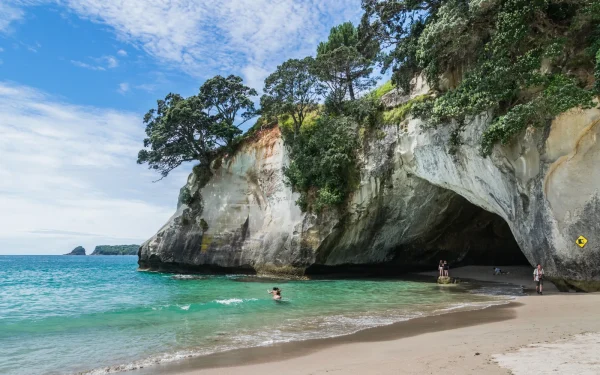
The Coromandel’s signature sight: a soaring limestone arch opening between two beaches inside a marine reserve. Access has changed since the 2023 storms damaged the clifftop track, so it’s increasingly reached by kayak or boat tour from Hahei — always check the Department of Conservation site for the current track status before you go. Go early for the best light and fewest crowds.
📖 Full details: How to Visit Cathedral Cove
🗺️ Directions (Google Maps)🚗 Open in Waze
2. Hot Water Beach
⏱️ Time: 2 hrs • 💲 Cost: Free (spade hire ~$5) • 🌊 Key: Within 2 hrs of low tide • 📍 Near: Hahei
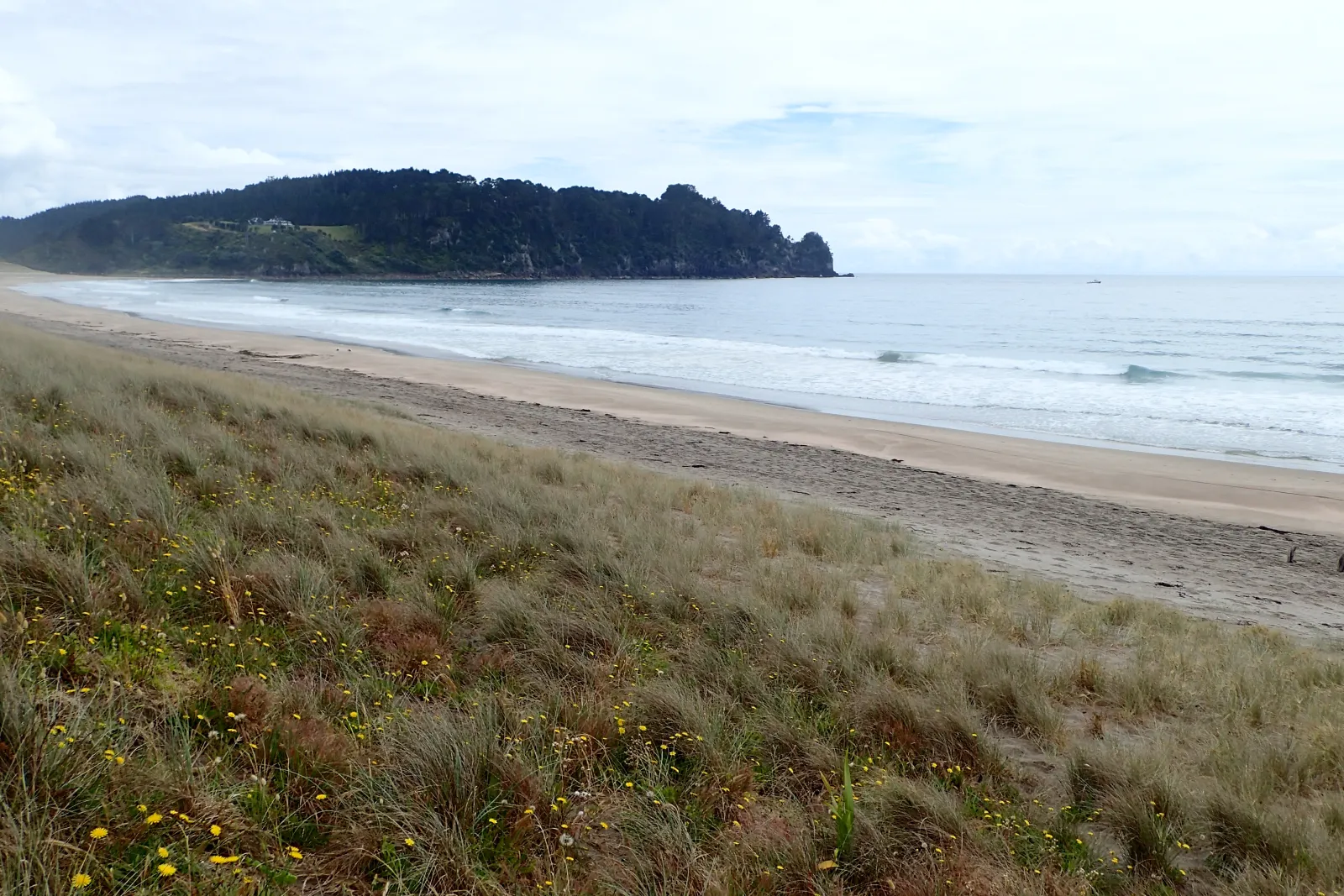
Geothermal water rises through the sand here, so you grab a spade and dig your own natural spa at the water’s edge. It only works for about two hours either side of low tide — check the tide chart and time your visit. Strong rips make the surf unsafe for casual swimming, so stick to digging.
📖 Full details: Hot Water Beach guide
🗺️ Directions (Google Maps)🚗 Open in Waze
3. Hahei Beach & Lonely Bay
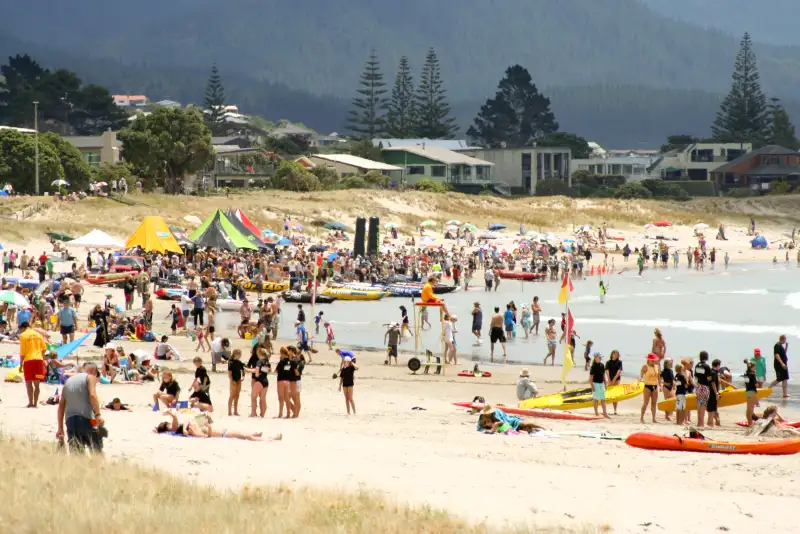
⏱️ Time: 1–2 hrs • 💲 Cost: Free • 🏖️ Good for: Swimming, families
The pink-tinged sand of Hahei Beach is a relaxed swimming spot and the staging point for Cathedral Cove. Nearby, tiny Lonely Bay — a short walk from Cooks Beach — is a sheltered gem that lives up to its name outside summer weekends.
🗺️ Directions (Google Maps)🚗 Open in Waze
4. Whitianga & the Ferry
⏱️ Time: Half day • 💲 Ferry: A few dollars each way • 📍 Region: Mercury Bay
The east coast’s main town sits on Mercury Bay, with a marina, the long sweep of Buffalo Beach and the much-loved passenger ferry to Ferry Landing — one of the country’s oldest stone wharves. From there it’s a short hop to Flaxmill Bay, Cooks Beach and the Shakespeare Cliff lookout. Whitianga is also a launch point for boat trips to Cathedral Cove.
📖 Full details: Whitianga & Mercury Bay guide
🗺️ Directions (Google Maps)🚗 Open in Waze
5. The Lost Spring
⏱️ Time: 2–3 hrs • 💲 Cost: Paid entry (adults ~$45) • 🌧️ Great for: Rainy days, couples
A boutique geothermal spa in the middle of Whitianga, with naturally heated mineral pools landscaped among tropical planting and waterfalls. It’s the perfect wet-weather or wind-down option and has an on-site cafe and bar. Over-14s only in the main pools, so it leans adult and relaxing rather than family-splashy.
🗺️ Directions (Google Maps)🚗 Open in Waze
6. New Chums Beach
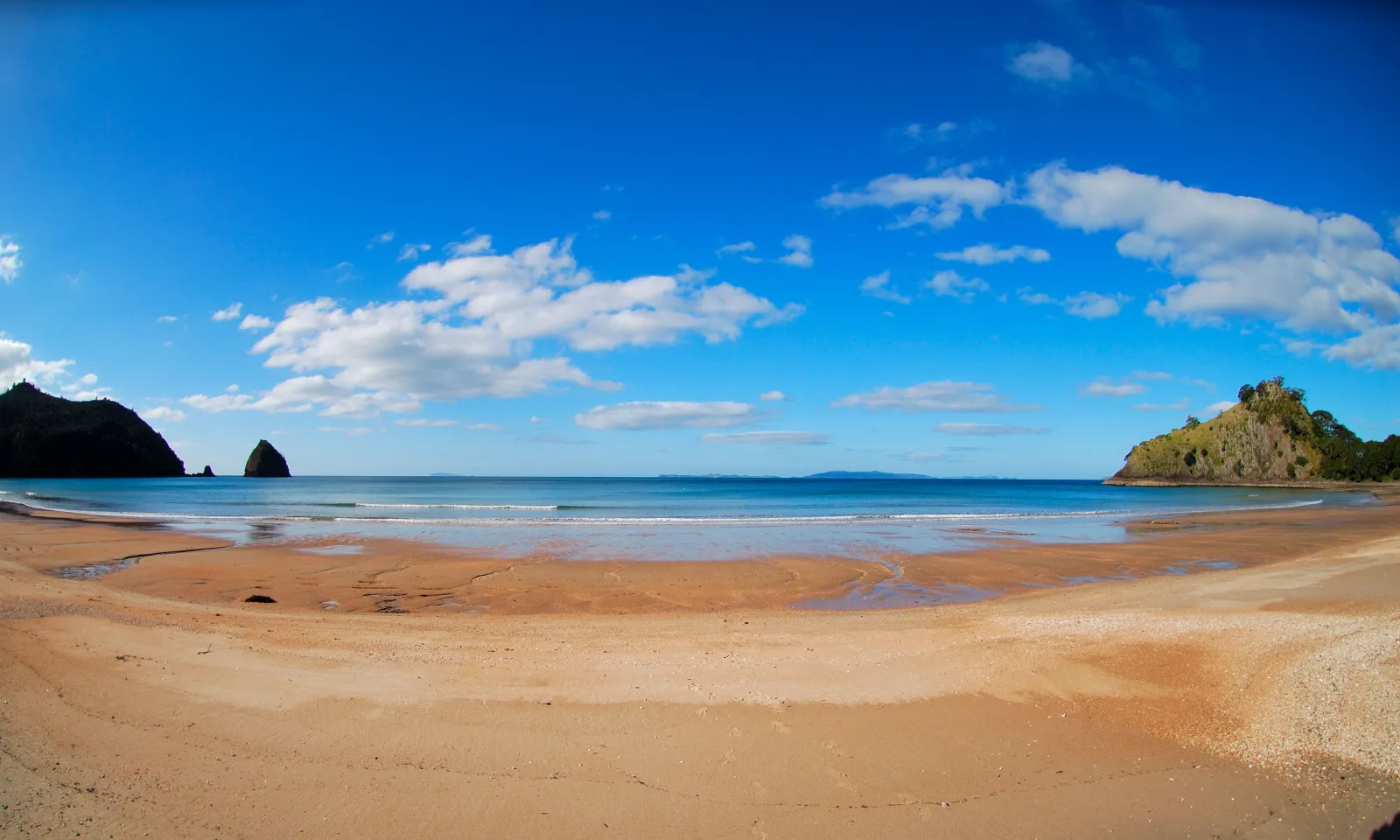
⏱️ Time: 2–3 hrs • 💲 Cost: Free • 🥾 Effort: 30–40 min walk, best at low tide • 📍 Near: Whangapoua
Regularly rated one of New Zealand’s most beautiful beaches precisely because there’s no road to it. Park at Whangapoua, wade the estuary at low tide and follow the rocky coastal track around to a long arc of undeveloped golden sand backed by native bush. Bring everything you need — there are no facilities.
🗺️ Directions (Google Maps)🚗 Open in Waze
7. Donut Island (Whenuakura)
⏱️ Time: Half day • 💲 Cost: Kayak hire/tour • 🛶 Effort: Guided kayak recommended • 📍 Off: Whangamata
Off the coast near Whangamata, Whenuakura (“Donut Island”) hides a collapsed-crater lagoon you reach by paddling through a narrow sea cave. Landing on the island is prohibited to protect it, but kayaking into the lagoon is unforgettable. Go with a guide or on calm seas around low tide.
📖 Full details: Donut Island kayak guide
West Coast: Coromandel Town & the Far North
8. Coromandel Town
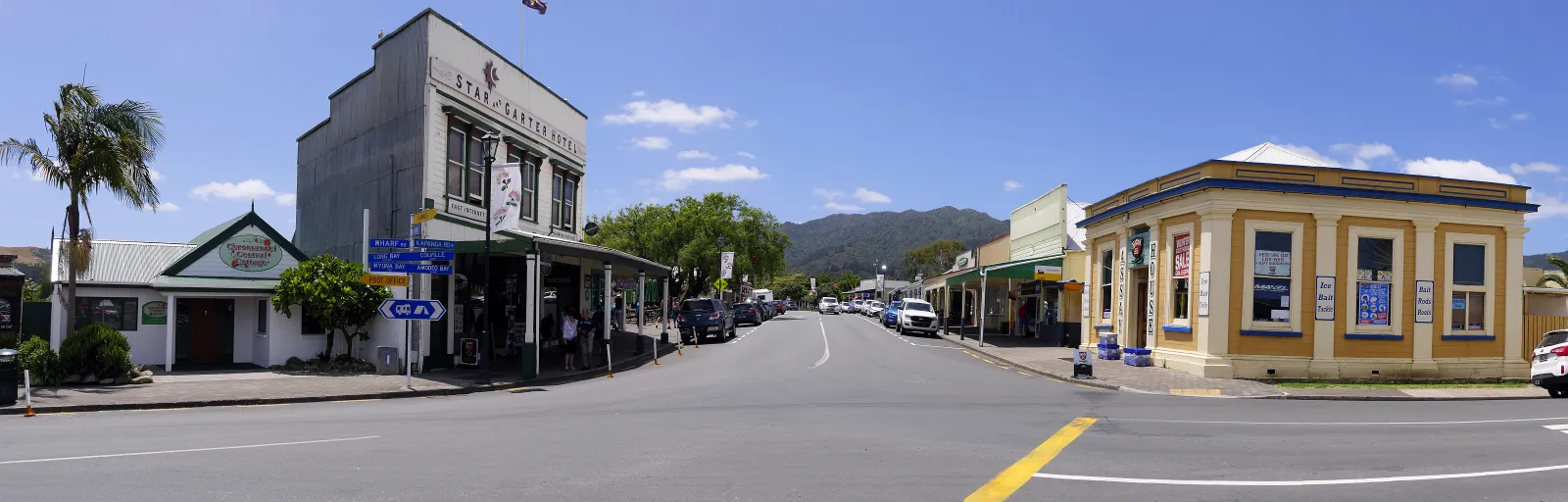
⏱️ Time: Half to full day • 💲 Cost: Free to wander • 🦪 Don’t miss: Green-lipped mussels
A historic gold-and-kauri town turned arts-and-foodie haven on the Hauraki Gulf. Wander the colonial main street, browse galleries and craft shops, and eat the famous local green-lipped mussels fresh. It’s also the gateway to the remote north.
📖 Full details: Coromandel Town guide
🗺️ Directions (Google Maps)🚗 Open in Waze
9. Driving Creek Railway
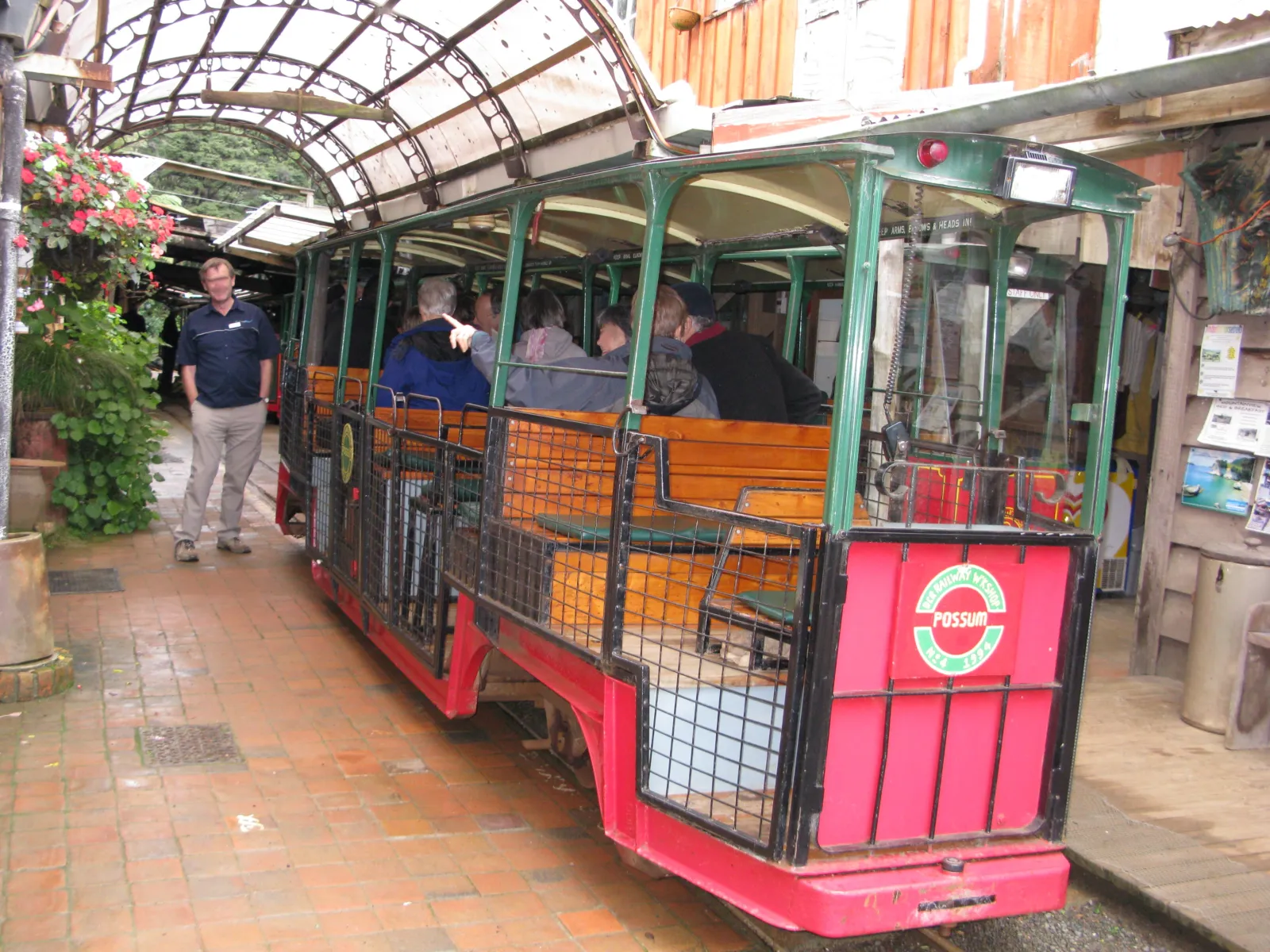
⏱️ Time: ~1 hr ride • 💲 Cost: Paid (adults ~$45, kids less) • 👪 Great for: Families • 📍 Near: Coromandel Town
The “Coromandel train” everyone searches for: a narrow-gauge mountain railway built by potter Barry Brickell that climbs through regenerating bush, over trestle bridges and through tunnels to the “Eyefull Tower” lookout over the Hauraki Gulf. Booking ahead is wise in summer. There’s also a zipline and walking trails on site.
🗺️ Directions (Google Maps)🚗 Open in Waze
10. Waiau Kauri Grove & Waiau Falls (309 Road)
⏱️ Time: 1–2 hrs • 💲 Cost: Free • 🥾 Effort: Easy 10–30 min walks • 📍 On: The 309 Road
Along the partly-unsealed 309 Road between Coromandel Town and Whitianga, a short stroll leads to a stand of giant kauri saved from logging, including the impressive “Siamese Kauri.” Just up the road, Waiau Falls is a pretty cascade with a chilly swimming hole — an easy, free combo.
🗺️ Directions (Google Maps)🚗 Open in Waze
11. Coromandel Coastal Walkway (Fletcher Bay)
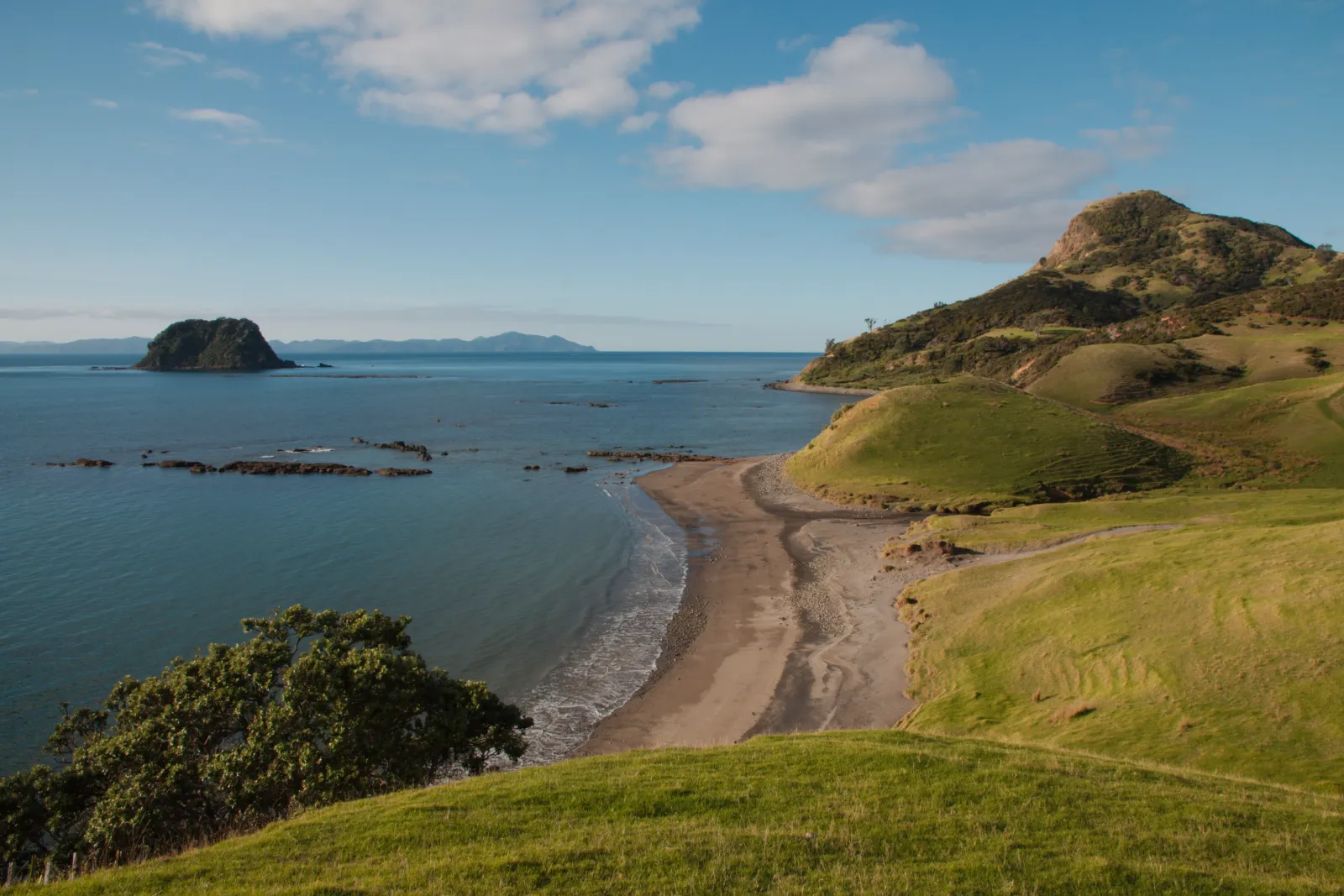
⏱️ Time: ~3.5 hrs one way • 💲 Cost: Free • 🥾 Effort: Moderate, ~10 km • 📍 Far north tip
At the wild northern tip, this 10 km track between Fletcher Bay and Stony Bay crosses farmland and headlands with sweeping views to the Mercury and Great Barrier islands. The long, partly-gravel drive to get there makes it a multi-day adventure with DOC campsites at both ends.
📖 Full details: Coromandel Coastal Walkway guide
🗺️ Directions (Google Maps)🚗 Open in Waze
Thames & the Ranges (inland)
12. The Pinnacles, Kauaeranga Valley
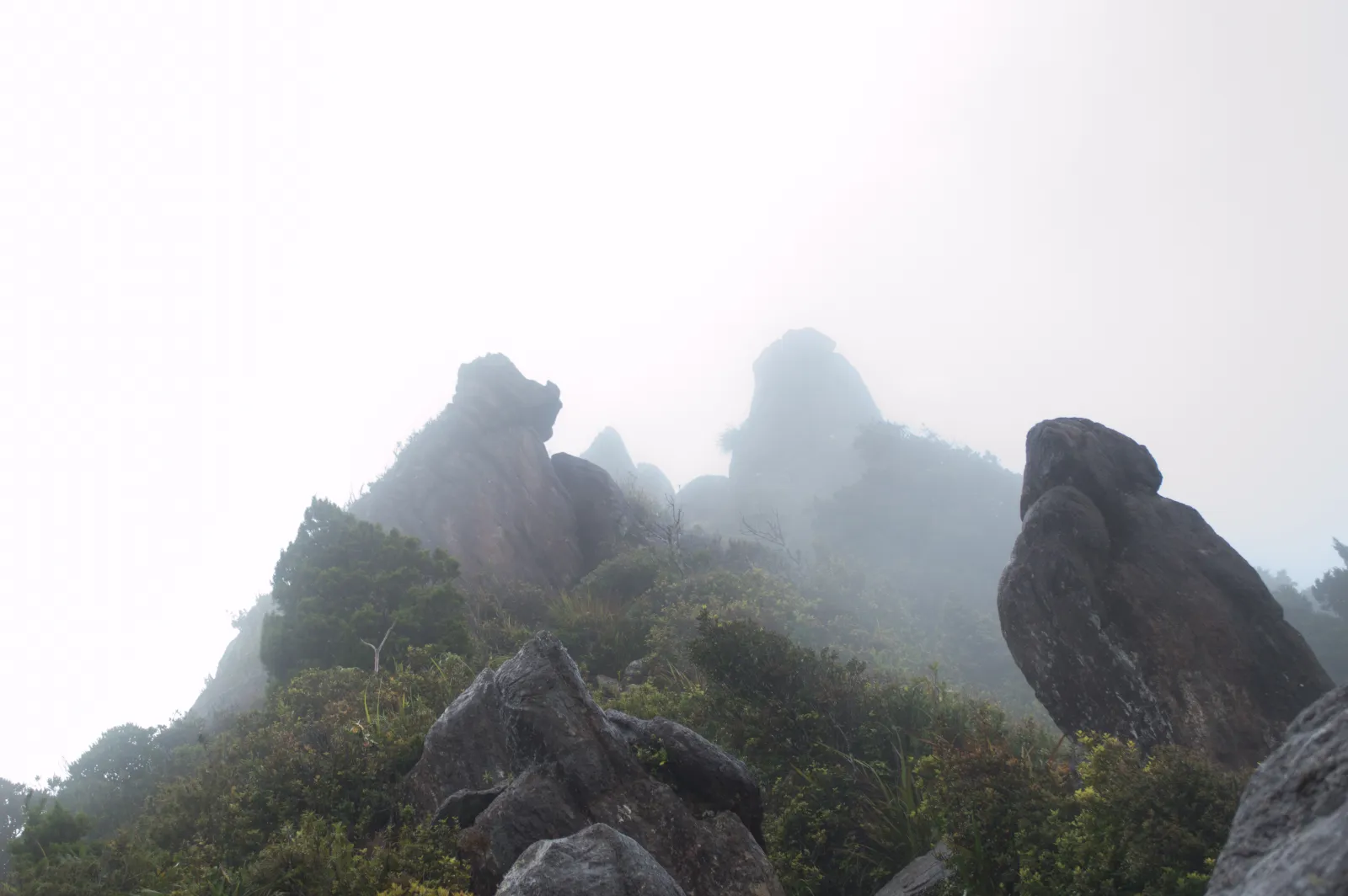
⏱️ Time: ~3 hrs to hut (overnight popular) • 💲 Cost: Free walk; hut fees apply • 🥾 Effort: Strenuous • 📍 From: Thames
The Coromandel’s classic hike climbs historic packhorse stone steps in the Kauaeranga Valley to a ridge of dramatic rock spires. Many stay overnight at the bookable Pinnacles Hut to catch sunrise. The final ladders to the summit are exposed — not for nervous heads, and best avoided in bad weather.
📖 Full details: The Pinnacles hike guide
🗺️ Directions (Google Maps)🚗 Open in Waze
13. Thames: gold-town history
⏱️ Time: Half day • 💲 Cost: Low • 🏛️ Good for: History, markets
The peninsula’s largest town and southern gateway, Thames boomed on 1860s gold. Visit the Goldmine Experience, walk the heritage main streets, and time your trip for the lively Saturday morning market. It’s also the launch point for the Kauaeranga Valley and the Pinnacles.
🗺️ Directions (Google Maps)🚗 Open in Waze
14. Karangahake Gorge
⏱️ Time: 2–3 hrs • 💲 Cost: Free • 🥾 Effort: Easy–moderate • 📍 South of: Waihi
On the peninsula’s southern edge, this dramatic river gorge hides gold-mining relics, the spooky 1 km lit Windows Walk and a former rail tunnel. The Hauraki Rail Trail runs through it, making it great for walking or easy cycling. A perfect stop on the way to or from Whangamata.
🗺️ Directions (Google Maps)🚗 Open in Waze
More ideas: free, family & rainy-day
🆓 Free things to do in the Coromandel: New Chums Beach, the Waiau Kauri Grove & Falls, Hot Water Beach (bring a spade), the Karangahake Windows Walk, the Coromandel Coastal Walkway, and simply beach-hopping the SH25 loop.
👪 With kids: Driving Creek Railway, digging at Hot Water Beach, the Whitianga ferry, and the gentle Karangahake tunnel walk (bring a torch).
🌧️ Rainy day: The Lost Spring spa, Coromandel Town’s galleries and cafes, and the Thames Goldmine Experience.
Plan your Coromandel trip
Getting there: The Coromandel is roughly a 1.5–2.5 hour drive from Auckland, and easy to reach from Hamilton, Tauranga and Rotorua. See our Auckland to the Coromandel driving guide.
Getting around: State Highway 25 loops the peninsula, with SH25A cutting across the middle. Roads are scenic but winding, and some routes (the 309 Road, the far north) are partly gravel — allow more time than the map suggests and fuel up before long drives.
When to go & tides: Summer is warm but busy; spring and autumn are quieter. Hot Water Beach, New Chums and Donut Island all depend on the tide, so check our tide times and weather forecast first.
Where to stay: From holiday parks to luxury baches — see our accommodation guide, and our overview of the Coromandel Peninsula.
Frequently asked questions
What are the top things to do in the Coromandel?
The headline experiences are Cathedral Cove, Hot Water Beach, the Driving Creek Railway, the Pinnacles hike and beach-hopping spots like New Chums and the Coromandel Coastal Walkway.
What can you do in the Coromandel for free?
Plenty: New Chums Beach, the Waiau Kauri Grove and Falls, digging your own pool at Hot Water Beach, the Karangahake Windows Walk and the Coromandel Coastal Walkway are all free.
Is one day enough for the Coromandel?
One day lets you pair two or three nearby east-coast highlights — for example Cathedral Cove and Hot Water Beach. To reach Coromandel Town and the north you’ll want two to three days.
What is the Coromandel famous for?
White-sand beaches, Cathedral Cove and Hot Water Beach, native kauri forest, gold-mining history and great walks — all within a compact peninsula.
When is the best time to visit?
December to February for warm swimming (and crowds), or spring and autumn for quieter beaches and good walking weather.