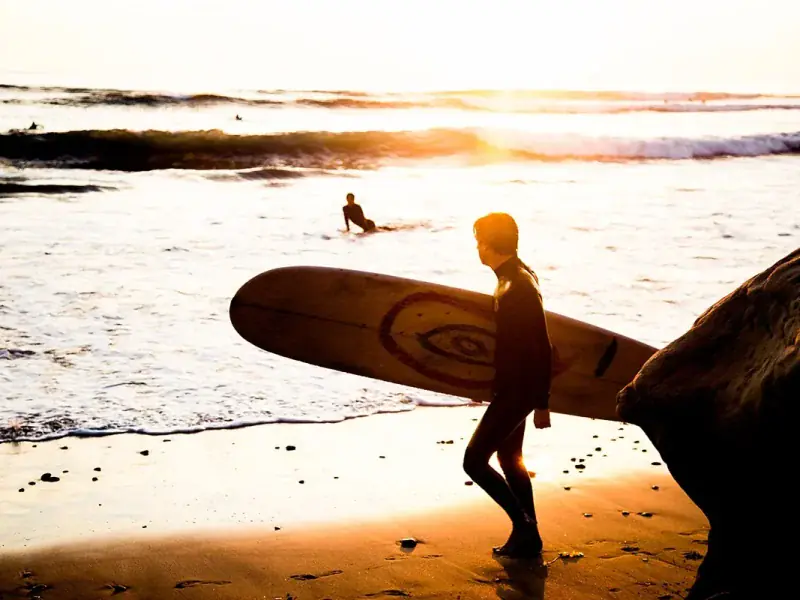
Whangamata Beach Overview
Whangamata Beach is a 4-kilometre sweep of golden sand on the eastern Coromandel coast, consistently ranked among New Zealand’s best surf beaches. From the harbour bar at the north end to the rocky headlands near Williamson Park in the south, the beach offers everything from world-class surf breaks to calm family swimming. The town sits directly behind the dunes, so you are never more than a few minutes’ walk from the sand.
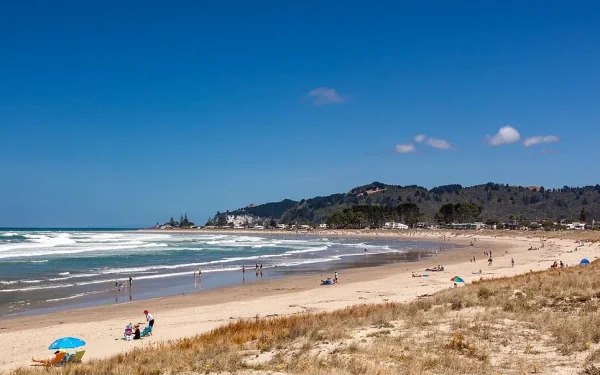
Whangamata’s 4-kilometre golden sand beach stretches south from the river mouth — one of the best beaches on the Coromandel Peninsula
The beach faces east into the Pacific, catching the morning sun and picking up swells from the northeast through to the southeast. Water temperatures range from around 15 degrees C in winter to 22 degrees C in late February. The sand is firm and golden — ideal for walking, running and beach cricket at low tide.
Whangamata Beach Locations
Central Beach & Surf Club
The heart of Whangamata Beach sits directly in front of the Whangamata Surf Life Saving Club on Esplanade Drive. This is the main patrolled area and the safest place to swim. The beach is wide here with consistent, manageable waves perfect for bodyboarding and learning to surf. At low tide the sand flats extend well out, creating shallow paddling areas for young children. The surf club building is a prominent landmark — you cannot miss it.
South End — Williamson Park
The southern end of Whangamata Beach is quieter and less developed, stretching from the residential streets down to the rocky outcrops near Williamson Park. This area attracts surfers chasing bigger, less crowded waves on solid south-east swells. At low tide you can walk right around the rocks to discover small pocket beaches and rock pools teeming with crabs, anemones and small fish. Williamson Park itself has picnic tables and shade under pohutukawa trees — a good spot for lunch after a beach walk.
North End — Towards Onemana
The northern stretch of Whangamata Beach runs from the central area up towards the harbour entrance and the Otahu Estuary. The beach narrows here and the sand gives way to a mix of shell and small stones near the estuary mouth. This is a popular area for long walks and fishing, and the estuary side offers calm, sheltered water perfect for stand-up paddleboarding, kayaking and safe swimming for small children. The famous “Island View” lookout is a short walk up the track from the north end car park.
Whangamata Surf Life Saving Club
The Whangamata Surf Life Saving Club is the hub of beach safety and the main landmark on the beachfront. Located centrally on Esplanade Drive, the club runs volunteer lifeguard patrols every day from Labour Weekend (late October) through Easter (April). During patrol hours — 10am to 6pm — the lifeguards set up the red and yellow flags marking the safest swimming zone. Outside these hours, the beach is unpatrolled. The club also hosts surf sports events and Nippers (junior surf lifesaving) on Saturday mornings throughout summer.
Surf Conditions at Whangamata Beach
Whangamata picks up swell from the north-east through to the south-east, with the most consistent waves arriving from the east. In summer, typical wave heights are 0.5 to 1.5 metres, with occasional larger swells from tropical weather systems. Winter brings bigger, more powerful surf, often 1 to 2.5 metres with larger sets possible.
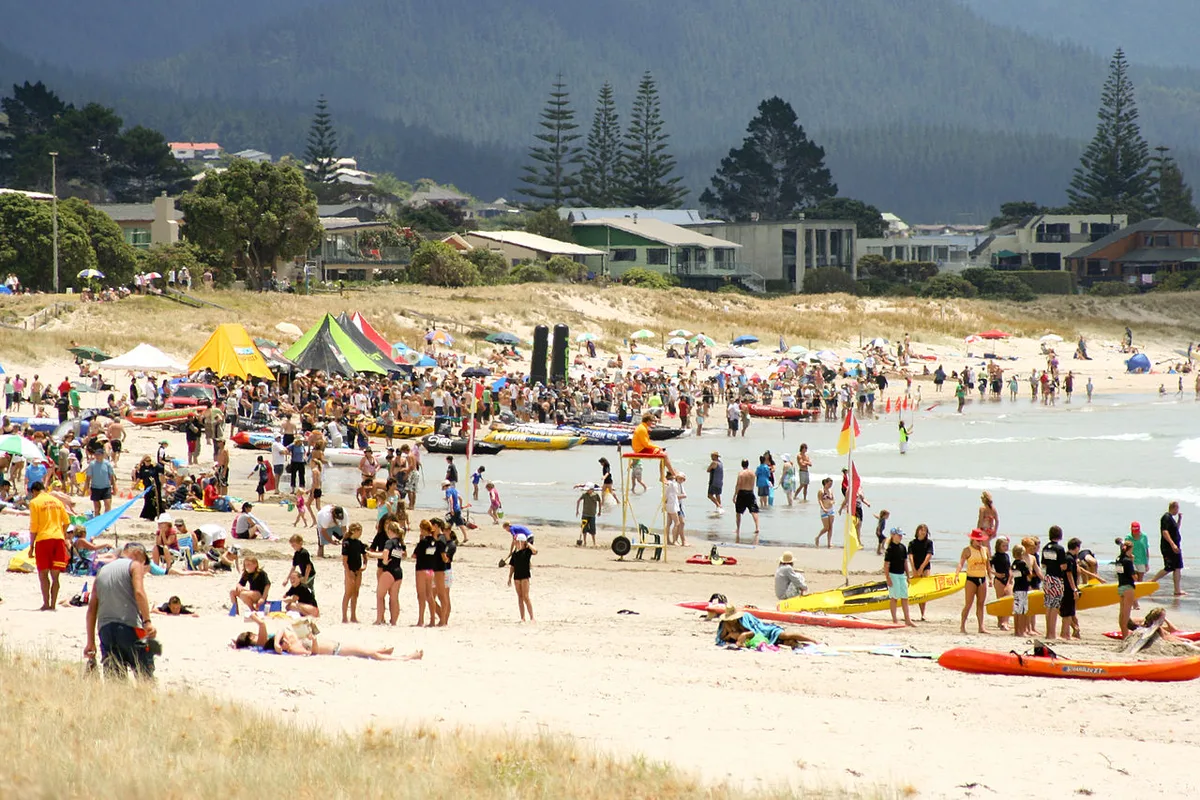
The beach is patrolled by surf lifesavers between the flags in summer — always swim between the flags
The main beach break works on all tides but is generally best around mid-tide. The sandbanks shift regularly, so the best peaks move around — look for where the waves are breaking cleanest and where other surfers are paddling out. The harbour bar at the north end produces a powerful right-hand wave on big swells that is strictly for experienced surfers — the currents here are extremely dangerous.
Best Conditions
- Wind: Light westerly or south-westerly offshore winds clean up the surf. Easterly onshore winds create messy, choppy conditions
- Tide: Mid-tide generally best. Low tide can be shallow on the sandbars
- Swell: East to north-east swells, 1–2m for most surfers
- Season: Consistent year-round. Summer offers warmer water and smaller, more friendly waves. Winter delivers bigger, more powerful surf
Whangamata Beach Safety & Rip Currents
Rip currents are the biggest hazard at Whangamata Beach. A rip is a narrow channel of water flowing away from shore — it can pull even strong swimmers out quickly. Rips are most dangerous on outgoing tides and after storms when the sandbars have been reshaped.
How to spot a rip
- A gap or channel in the breaking waves where the water appears calmer or darker
- Foam, seaweed or discoloured water being carried steadily out to sea
- Rippled or choppy water between areas of calmer surf
What to do if caught in a rip
- Stay calm — do not panic or try to swim directly against the current
- Float or tread water to conserve energy
- Swim parallel to the shore until you are out of the rip, then swim back to the beach at an angle
- If you cannot escape, raise one arm and call for help — lifeguards are trained to respond quickly
Facilities & Practical Information
- Toilets: Public toilets at the surf club (central), Williamson Park (south end), and the north car park
- Showers: Cold-water outdoor showers at the surf club
- Beach driving: Restricted and by permit only during certain events. Generally, vehicles are not permitted on the beach
- Dogs: Dogs are allowed on the beach but must be on a lead from 9am to 7pm during summer (1 December – 1 March). Off-lead allowed outside these times. Always clean up after your dog
- Fires: Open fires are not permitted on the beach
- Camping: Overnight camping on the beach or in beach car parks is not permitted
How Long is Whangamata Beach?
Whangamata Beach stretches approximately 4 kilometres from the harbour bar at the north end to the rocky outcrops near Williamson Park at the south end. Walking the full length takes about 45 minutes to an hour at a comfortable pace. At low tide the sand is firm and flat — perfect for a long walk, a jog, or even cycling. Many locals walk the full length and back as their regular exercise route.
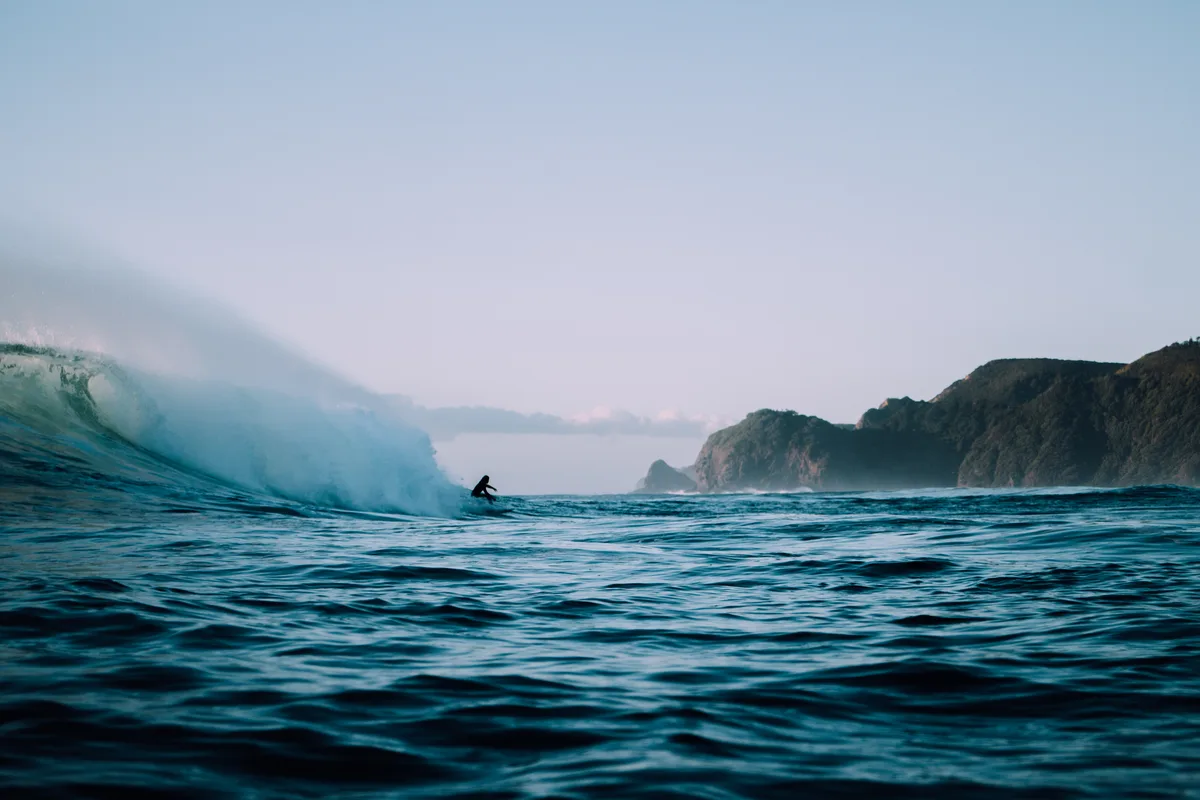
The Whanga Bar is Whangamata’s legendary surf break — a long right-hander that peels off the river mouth sandbar and is best at 3-5ft on an incoming tide
Tips for Visiting Whangamata Beach
- Arrive early in summer: Beach parking fills quickly from mid-morning during peak season (December–January). Get there before 10am for the best spots
- Bring sun protection: There is virtually no shade on the beach itself. Bring a beach umbrella, sunscreen (SPF 50+), a hat and plenty of water
- Check the forecast: MetService and Surfline both provide accurate wave and weather forecasts for Whangamata
- Respect the flags: If the lifeguards have moved the flags or closed the beach, there is a good reason. Ask them about conditions — they are happy to help
- Low tide exploring: Some of the best rock pools and shell collecting are at the south end during low spring tides
Plan Your Beach Visit
- Whangamata Tide Times — check high and low tides before you go
- Whangamata Surf Cam — live wave conditions at the beach
- Whangamata Weather — current forecast and 7-day outlook
- Donut Island — kayak from the beach at high tide
- Things to Do in Whangamata — beyond the beach
- Whangamata Accommodation — stay close to the beach