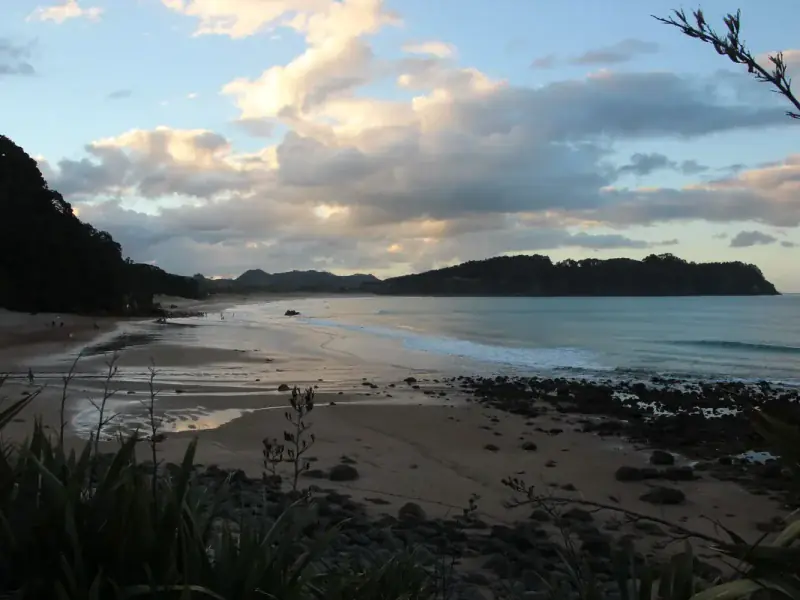
Whangamata Surf Conditions
Whangamata is widely regarded as one of New Zealand’s best beach breaks. The main beach picks up swell from the north, northeast and east, producing consistent waves throughout the year. The quality of the surf depends on swell direction, wind conditions and the shape of the ever-shifting sand bars.
The best conditions at Whangamata are typically an east to northeast swell of 1-2 metres, combined with light offshore winds from the west or southwest. These conditions produce clean, hollow waves that peel along the sandbars for up to 100 metres.
Main Surf Breaks
The Bar
The most famous wave in Whangamata is “The Bar” — a powerful left-hand break that forms at the harbour entrance. When a solid north-east swell combines with an outgoing tide, The Bar produces long, hollow barrels that have attracted surfers from around the world. This wave is for experienced surfers only due to strong currents and the rocky harbour wall.
Main Beach
The main beach offers multiple peaks along its 4km length, suitable for all abilities. The area in front of the surf club tends to have the most consistent banks. Beginners should stick to the whitewater and smaller waves at the southern end of the beach.
South End
The southern end of the beach, near the stream mouth, can produce excellent waves on a bigger swell. The sandbars here shift frequently, so it pays to watch from the dunes before paddling out.
Surf Safety
Always swim and surf between the red and yellow flags during patrolled hours. Rip currents are common at Whangamata, particularly on bigger swells and outgoing tides. If caught in a rip, do not fight it — swim parallel to the beach until free of the current, then swim back to shore.
The Whangamata Surf Life Saving Club patrols the main beach from Labour Weekend through to Easter. Outside these times, there are no lifeguards on duty.
Best Season for Surf
Whangamata receives surf year-round, but the most consistent swells arrive between March and October when low-pressure systems in the Pacific generate north and northeast groundswells. Summer can be flat for extended periods, though tropical cyclones occasionally send powerful swells south from January to March.