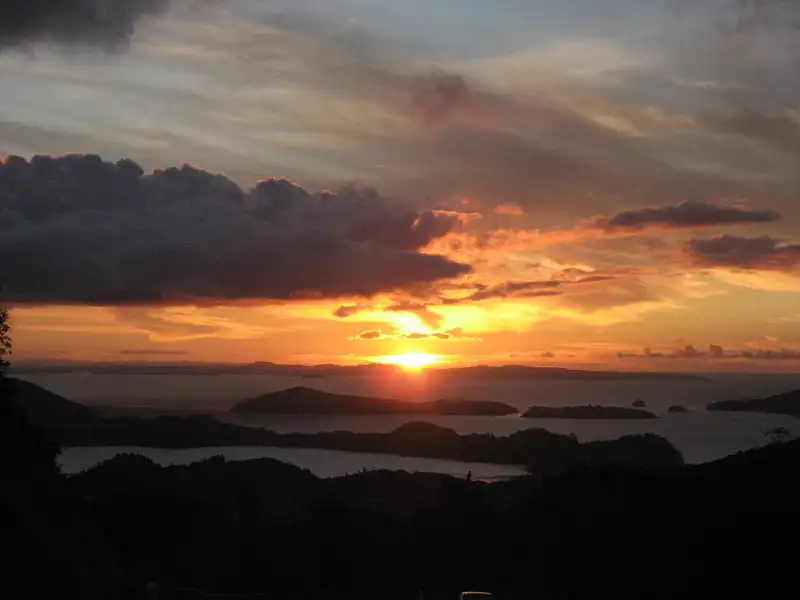
What Does Whangamata Mean?
The name “Whangamata” comes from te reo Maori. It is generally translated as “harbour of obsidian” or “obsidian harbour” — “whanga” meaning harbour or bay, and “mata” referring to obsidian (volcanic glass). Obsidian was a valuable resource for Maori, used for cutting tools and traded across New Zealand.
History of Whangamata
The Whangamata area has a long Maori history, with the harbour and coastline providing abundant food resources. The area was home to several iwi and hapu over centuries.
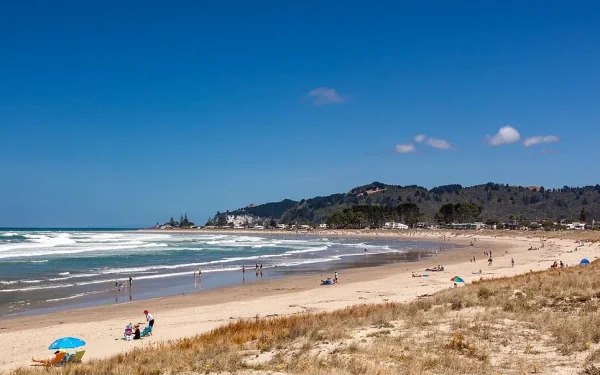
Whangamata Beach from above — the sweeping golden bay backed by pohutukawa-covered headlands
European settlement began in the late 1800s, initially focused on timber milling and gold mining in the surrounding ranges. The town gradually developed as a farming service centre before becoming the popular beach holiday destination it is today.
Whangamata Population
Whangamata has a permanent resident population of approximately 4,000–4,500 people. However, during peak summer holidays (particularly Christmas through to late January), the population swells dramatically to an estimated 30,000–40,000 as holidaymakers fill the town’s baches, motels, campgrounds and holiday parks.

Whangamata’s 4-kilometre beach is the centrepiece of the town — golden sand, surf breaks and patrolled swimming in summer
Whangamata Location & Geography
Whangamata is located on the eastern (Pacific) coast of the Coromandel Peninsula in the Waikato region of New Zealand’s North Island. It is within the Thames-Coromandel District and is approximately 2.5 hours’ drive from Auckland.
Whangamata Region
The wider Whangamata area includes the neighbouring settlements of Onemana (to the north) and Whiritoa (to the south), as well as the rural hinterland extending into the Coromandel Range. The town is the main service centre for the southeastern Coromandel.
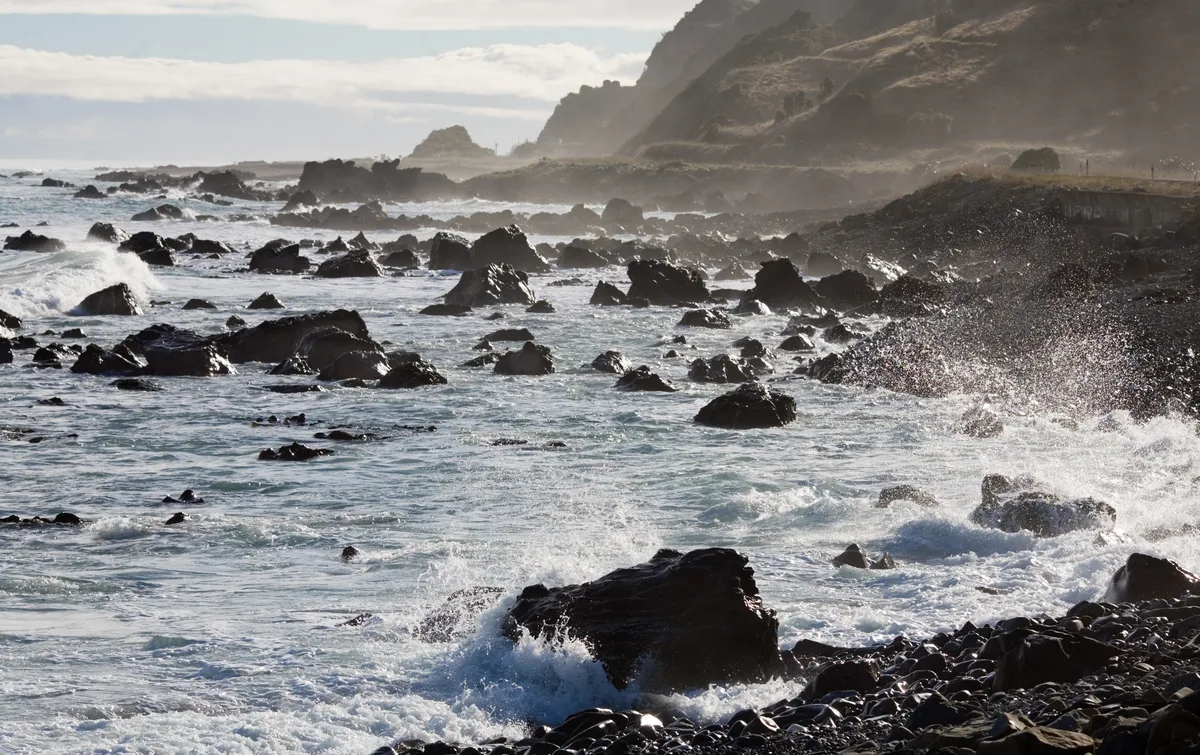
The Coromandel coastline offers some of New Zealand’s most dramatic coastal scenery